Essay topics and literature
What is a essay?
An essay is a short piece of writing on a topic related to the course, where you have selected the approach and for which you have gotten the teacher’s approval. An essay is not a thesis and it does not have to create new knowledge on the topic but show expertise acquired from source literature. However, an essay differs from a summary as the purpose is to produce an independent text on the selected topic based on a number of sources. Your perspective and opinions are valuable but remember to always justify them carefully. The most important characteristic of an essay – the individual voice – does not mean free stream of consciousness as it is a scientific text, but a well-reasoned analysis based on source materials and literature and the reflections rising from them.
A good guideline is that you can comment on the literature and have a discussion with it, a kind of a dialogue. An essay shows expertise on the topic and an understanding and command of the source materials.
In evaluation of the essay, attention is paid to how well the topic is narrowed down, command of the course contents, neatness of the layout, grammar, and the outline and structure of the essay. For the evaluation of the contents, it is also considered how well the arguments and interpretations have been justified. Please, read essay instructions carefully before you start writing and also check the format of the essay before returning the essay for evaluation. Evaluation scale is Pass/Fail.
First essay: What is family?





In this first essay you will explore different theories and concepts concerning family and the definitions of the family. Based on the literature you draw up the essay in which you examine what is a family, it is defined in different theories and how the different concepts differ from each other for example in areas of different sciences. You should also examine how your own views and assumptions are similar different in relation to the research knowledge. The length of the essay is 7 pages (the cover, the tables of content and references not includes in this number). You should write this essay according to given essay instructions.
Literature for essay:
1. Katherine R. Allen, K. A. & Henderson, A. C. 2017. Family Theories: Foundations and Applications. (choose 3–4 applicable in your issue)
2. Sihvonen, E. 2020. From family policy to parenting support: Parenting-related anxiety in Finnish family support projects.
3. Castrén, A-M. 2014. Insiders and outsiders in stepfamilies: Adults’ and children’s views on family boundaries.
Second essay: Parents, parenting and child rearing






For the second essay, you should collect e.g., during a month, news and articles from papers and magazines, which consider family and parenting issues and child rearing. Then you should explore from the data you collected, how beliefs, attitudes and views, presented in the data, proportionate to scientific knowledge. You can utilize your studies of scientific research methods, if you have performed them. You will do a small study in this task, which is based on literature described under. Please, choose 4 articles and use that literature in your essay (10 pages, (the cover and the tables of content and bibliography not included in this number). Write your essay according to given essay instructions.
Literature (choose 4 articles):
1. Sorkkila, M., & Aunola, K. 2020. Risk factors for parental burnout among Finnish parents: The role of socially prescribed perfectionism. Journal of Child and Family Studies, 29 (3), 648–659.
2. Niemi, P., Nurmi, J.-E., Lyyra, A.-L., Lerkkanen, M.-K., Lepola, J., Poskiparta, E., & Poikkeus, A.-M. 2011. Task avoidance, number skills and parental learning difficulties as predictors of poor response to instruction. Journal of Learning Disabilities, 44, 459–471.
3. Lankinen, V., Lähteenmäki, M., Kaljonen, A. & Korpilahti, P. 2020. Father–child activities and paternal attitudes in early child language development: the STEPS study.
4. Neitola, M. 2018. Parents as teachers and guides of their children’s social skills. Journal of Early Childhood Education Research 7(2), 392–414.
5. Lähteenmäki, M., Hakyemez-Paul, S. & Pihlaja, P. 2019. Formal and informal sources of paternal support in early parenthood. Early Child Development and Care.
6. Malinen, K., Rönkä, A., Sevón, E., & Schoebi, D. 2017. The difficulty of being a professional, a parent, and a spouse on the same day: Daily spillover of workplace interactions on parenting, and the role of spousal support. Journal of Prevention and Intervention in the Community, 45 (3), 156–167.
7. Ristikari. T., Merikukka, M. & Hakovirta, M. 2018. The significance of timing and duration of social assistance receipt during childhood on early adult outcomes. Longitudinal and Life Course Studies 9(3), 312–326.
8. Beckmeyer, J. J. et al. 2020. Family management practices and positive youth development in stepfamilies and single‐mother families. Family Relations, 69(1), 92–108.
9. Rönkä, A., Malinen, K., Metsäpelto, R.-L., Laakso, M.-L., Sevón, E., & Verhoef-van Dorp, M. 2017. Parental working time patterns and children’s socioemotional well-being: Comparing working parents in Finland, the United Kingdom, and the Netherlands. Children and Youth Services Review, 76, 133–141.
10. Sevón, E. 2015. Who’s Got the Power?: Young Children’s Power and Agency in the Child-Parent Relationship. International Journal of Child, Youth and Family Studies, 6 (4–1), 622–645.
11. Hakyemez-Paul, S., Pihlaja, P. & Silvennoinen, H. 2018. Factors affecting early childhood educators’ views and practices of parental involvement. Journal of Early Childhood Education Research.
12. Or other scientific articles you can find (not older than 10 years).
Third essay: Cooperation with a family

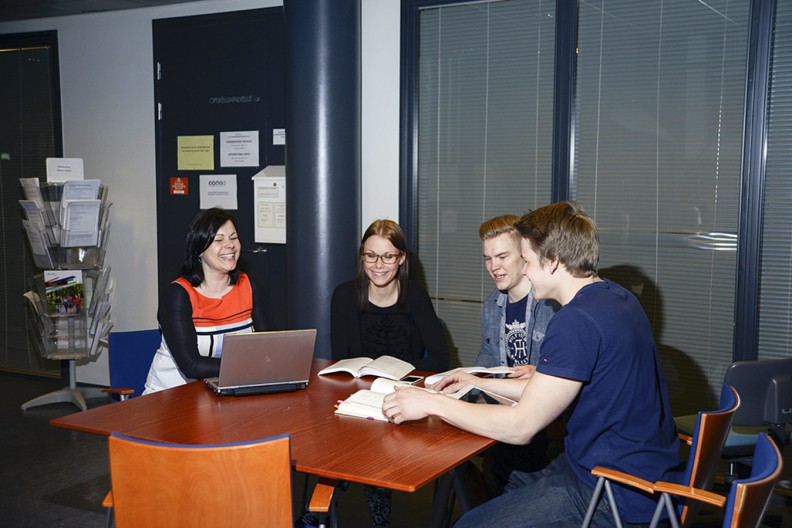

In the last essay of the course, you study cooperation with a family and homes. As a teacher you meet and interact with many and many kinds of families and homes. Cooperation with parents and guardians is necessary to support children’s learning and parental child rearing. Cooperation is also statutory for professionals.
Firstly, you should familiarize with Finnish National curriculums (Early childhood, education and care; Basic Education)
Secondly, you draw up the essay in which you examine the significance of the cooperation with the homes and families from the point of view of the child’s growth and learning. You can go deeply into the challenges of the cooperation and finding solutions to them, or concentrate on positive and functional cooperation.
You can also choose cooperation in special education for your issue and examine what kind of issues and premises are essential in that. You may also create and develop the model of the cooperation – such as you see it. You can define your subject yourself and provide it with a heading and then write an essay of 10 pages (based on the literature under, the cover and the tables of content and bibliography not included in this number, according to given essay instructions). Choose 4 articles from the list, and you can also use other articles you have found.
Literature (choose 4 articles):
1. Curriculums and laws concerning education and cooperation in it
2. Hakyemez-Paul, S., Pihlaja, P. & Silvennoinen, H. 2018. Parental involvement in Finnish day care – what do early childhood educators say? European Early Childhood Education Research Journal, 26 (2).
3. Vlasov, J. & Hujala, E. 2017. Parent-teacher co-operation in early childhood education – Directors’ views to changes in the USA, Russia, and Finland. European Early Childhood Education Research Journal (EECERJ), 25(5), 732–746.
4. Uusimäki, L., Yngvesson, T. E., Garvis, S. & Harju-Luukkainen, H. 2019. Parental Involvement in ECEC in Finland and in Sweden. In S. Garvis et al. (eds.), Nordic Families, Children and Early Childhood Education, Studies in Childhood and Youth.
5. Heiskanen, N. et. al. 2019. Intertextual Voices of Children, Parents, and Specialists in Individual Education Plans. Scandinavian Journal of Educational Research, 36–53.
6. Alasuutari, M. 2010. Striving at partnership: parent–practitioner relationships in Finnish early educators’ talk. European Early Childhood Education Research Journal.
7. Orell, M. & Pihlaja, P. Cooperation between home and school in the Finnish Core Curriculum 2014. Nordic Studies in Education 2020; 2: 107–128.
8. Kikas, E., Poikonen, P.-L, Kontoniemi, M., Niilo, A., Lyyra, A.-L., & Lerkkanen, M.-K. 2011. Mutal trust between kindergarten teacher and mother and its relations with family characteristics in Estonia and Finland. Scandinavian Journal of Educational Research, 55 (1), 23–37.
9. Lerkkanen, M-K., Kikas, E., Pakarinen, E., Poikonen, P-L & Nurmi, J-E (in press). Mothers’ Trust Toward Teachers in Relation to Teaching Practices. Early Childhood Research Quarterly.
10. Räty, H., Kasanen, K., & Laine, N. 2009. Parents’ participation in their child’s schooling. Scandinavian Journal of Educational Research, 53(3), 277–293.
11. Widding, G. 2012. Practices in home-school cooperation – a gendered story? Teaching Education 24(2), 209–221.
12. Thompson, I., Willemse, M., Mutton, T., Burn, K. & De Brüine, E. 2018. Teacher Education and Family-School Partnerships in Different Contexts: A cross Country Analysis of National Teacher Education Frameworks Across a Range of European Countries. Journal of Education for Teaching.
13. Alanko, A. 2018. Preparing Pre-service Teachers for Home-School Cooperation – Exploring Finnish Teacher education programmes. Journal of Education for Teaching, 44(3), 321–332.
14. Averill, R., Metson, A. & Bailey, S. 2016. Enhancing Parental Involvement in Student Learning. Curriculum Matters, 12, 109–131.
15. Böök, M. L. & Perälä-Littunen, S. 2015. Responsability in Home-School Relations: Finnish Parents Views. Children and Society, 29(6), 615–625.
16. Epstein, J. L. 2013. Foreword: Ready or not? Preparing Future Educators for School, Family and Community Partnerships. Teaching Education, 24(2), 115–118.
17. Helgøy, I. & Homme, A. 2017. Increasing Parental Participation at School Level: A ’Citizen to serve’ or a ’customer to steer’? Nordic Journal of Studies in Educational Policy.